
Bedrot · Sleep Science Stories
Your ancestors slept in two nights
For most of human history, waking up in the middle of the night was not a problem. It was the plan. The night came in two acts, and the intermission was one of the most human hours of the day.
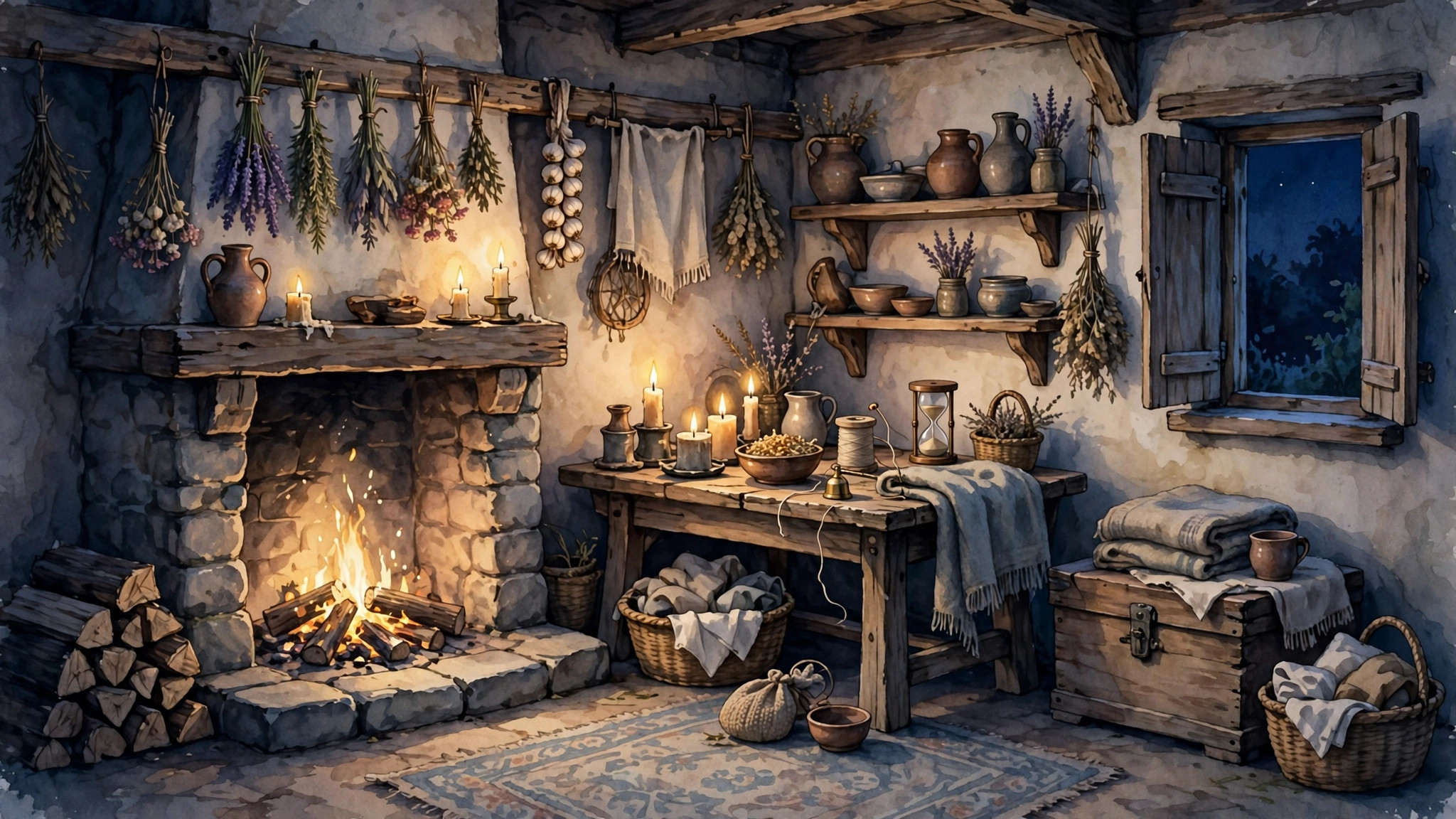
First sleep, second sleep
Historian Roger Ekirch spent years reading diaries, letters, court records, and literature from before the age of artificial light, and he published the pattern in his book At Day's Close in 2005. Again and again, the same shape appeared. People went to bed early, slept a first sleep of several hours, then woke for an hour or so in the middle of the night, and then slept a second sleep until morning.
The language of the time treats this as too ordinary to explain. Records refer to the first sleep and the second sleep the way we would refer to lunch: as a fixed feature of the day that everyone shared and nobody questioned.
The hour in between
The waking hour was not empty time. People used it to pray, to talk quietly, to tend the fire, to think over dreams from the first sleep, to visit neighbors in villages where everyone was awake at the same strange hour. It was, by many accounts, a reflective, unhurried stretch, a small room in the middle of the night with no demands in it.
What changed
What ended the pattern was not a discovery about health. It was light. Street lighting, then lamps in every home, then screens, pushed bedtime later and later while morning stayed fixed. The night got compressed into a single block, the middle hour vanished, and the solid eight hours became the definition of normal, so normal that waking at 3 AM now feels like a personal defect.
The historical record suggests it is nothing of the kind. It suggests your brain may be running very old software, in a world that redesigned the night around it. The 3 AM waking that worries you would have been, for your ancestors, simply the middle of the night, right on schedule.
Source: Roger Ekirch, At Day's Close, 2005: diaries, letters, and records from before artificial light routinely describe a first sleep, a waking interval, and a second sleep.
This is reported science, told as a story. It is not medical advice.
Keep reading

Make tonight the night your phone stops winning.
Bedrot: Bedtime Control is free on the App Store. The science says the night crew is standing by, waiting for you to clock out. Bedrot, with a little help from Dozer, makes sure the phone stops arguing about it.