
Bedrot · Sleep Science Stories
Why you sleep badly the first night anywhere
New city, nice hotel, long day, and somehow you still sleep terribly. It is not the pillow. Brain scans show that on the first night in a new place, part of your brain refuses to fully clock out. It is standing guard.
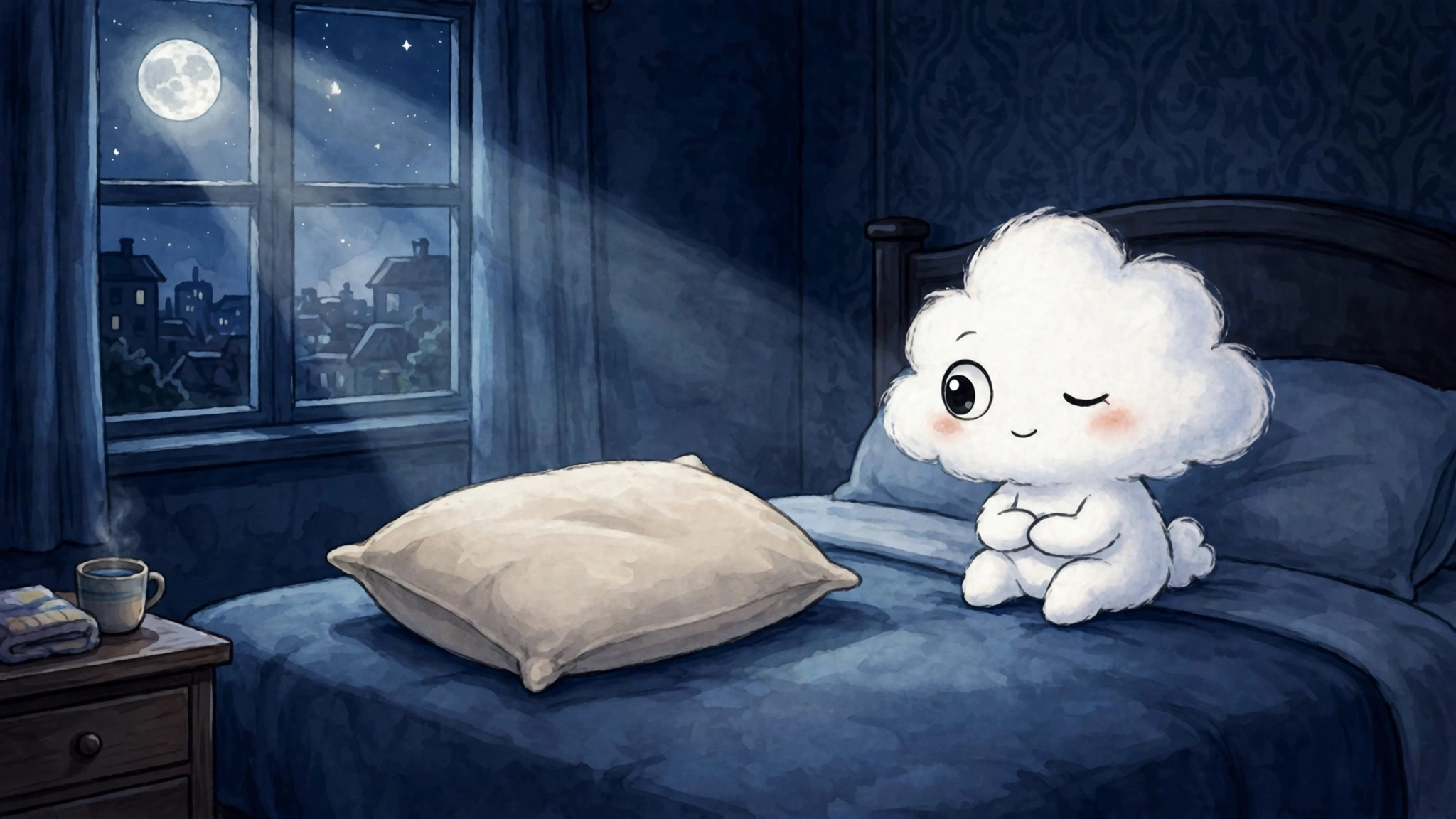
35 volunteers, one strange result
In 2016, researchers Masako Tamaki, Yuka Sasaki, and colleagues published a study in Current Biology on what sleep scientists call the first night effect. They brought 35 volunteers into a sleep lab and measured their brains across two nights in the same unfamiliar place.
On the first night, the scans showed an asymmetry. A network in the left side of the brain stayed in noticeably lighter sleep than the right side, as if one part of the brain was sleeping with one eye open. The volunteers in that state also reacted faster to unusual sounds played during the night. Part of the brain was not resting. It was listening.
An old, sensible alarm
The interpretation the researchers offered is elegant. A new environment is, to an ancient brain, an unassessed risk. So the brain hedges: it lets most of itself sleep while one network keeps watch, ready to wake the whole system if something sounds wrong. Some animals do a version of this openly, sleeping with half the brain at a time. Humans appear to run a quieter, partial version on night one in a strange place.
Night two tells the truth
Here is the part that makes the story. On the second night in the same place, the asymmetry was gone. The guard stood down. The brain had filed the room as known, and known means safe enough for full sleep. Which means the bad first night is not a malfunction or a personal failing. It is a security system doing one cautious pass, and then, satisfied, letting you actually rest.
So the hotel sleep rule writes itself: the first night is the toll. The second night is the destination.
Source: Tamaki, Sasaki, and colleagues, Current Biology, 2016: in 35 volunteers, a left hemisphere network showed lighter sleep on the first night in a new place, and the effect was gone by the second night.
This is reported science, told as a story. It is not medical advice.
Keep reading

Make tonight the night your phone stops winning.
Bedrot: Bedtime Control is free on the App Store. The science says the night crew is standing by, waiting for you to clock out. Bedrot, with a little help from Dozer, makes sure the phone stops arguing about it.